Grant Morrison: Amazon Rejected The Invisibles Movie - Billionaire Climate Conspiracy Too Hot to Adapt
Morrison reveals Amazon Studios called The Invisibles 'too dangerous' to produce, specifically citing a billionaire climate conspiracy storyline. What stories are being gatekept from mainstream adaptation?
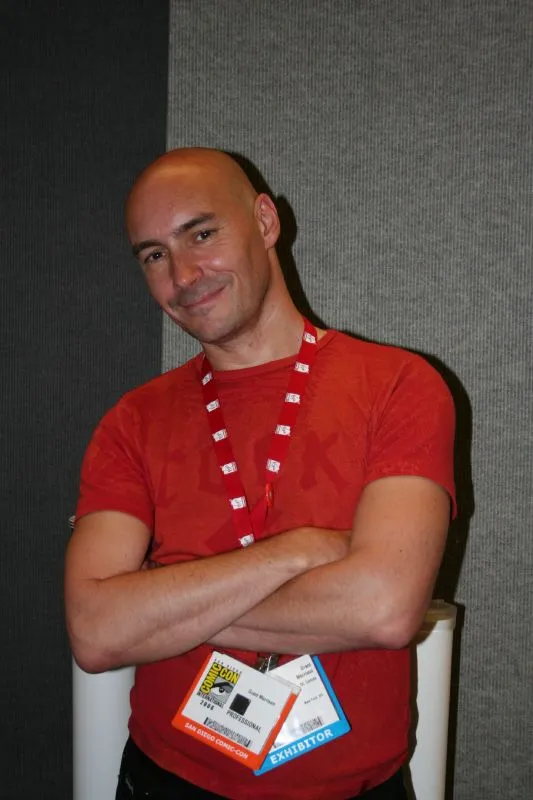
Grant Morrison: Amazon Rejected The Invisibles Movie - Billionaire Climate Conspiracy Too Hot to Adapt
Grant Morrison's The Invisibles influenced The Matrix so heavily that Morrison once found "over eighty points of similarity" between the comic and the Wachowskis' film. The 1994-2000 Vertigo series about anarchist freedom fighters battling interdimensional conspiracies became a cult phenomenon. But despite multiple adaptation attempts over the years, it's never made it to screen.
Now we know why Amazon passed. According to Morrison's recent Xanaduum newsletter revelation, the studio called the property "too dangerous" to produce. The specific problem? A storyline about a "billionaire climate conspiracy."
Amazon—founded by billionaire Jeff Bezos—rejected a story critiquing billionaire manipulation of climate narratives. The irony writes itself.
What Makes The Invisibles So "Dangerous"
The Invisibles follows a cell of the Invisible College fighting the Archons of the Outer Church, interdimensional aliens enslaving humanity. The team includes bald anarchist King Mob (modeled after Morrison), transgender Brazilian shaman Lord Fanny, time-traveling psychic Ragged Robin, and Liverpudlian street kid Jack Frost. They use time travel, magic, and ultraviolence to battle conspiracy.
Morrison wrote it from 1994 to 2000 based partly on an alleged alien abduction in Kathmandu. The series mixed conspiracy theories, occultism, pop culture, chaos magic, and revolutionary politics into what Morrison called a "hypersigil"—a magical working disguised as entertainment.
It became huge within goth and counterculture communities. And its influence on The Matrix remains one of comics' most discussed "borrowings." Morrison told Suicide Girls that design staff on The Matrix were "given Invisibles collections and told to make the movie look like my books."
BBC Scotland optioned it years ago. Morrison completed two scripts. Nothing happened.
In 2018, Morrison signed with Universal Cable Productions (UCP) to develop The Invisibles for TV, riding the success of Happy!, their Syfy series with Chris Meloni. That stalled too.
Now Amazon. Same result, but this time we know why.
The Billionaire Problem
Morrison's The Invisibles always dealt with power, conspiracy, and resistance. The comic featured corporate control, government surveillance, media manipulation—all the ways elites maintain social control. Updating those themes for 2026 hits differently. Climate change dominates headlines. Billionaires like Elon Musk and Bezos wield unprecedented cultural power. A story about billionaire climate conspiracies would resonate uncomfortably for the companies financing these adaptations.
Especially when that company is Amazon. Bezos owns The Washington Post. Amazon's business model depends on massive carbon emissions from global logistics. Of course they don't want to fund a story questioning whether billionaires are the problem.
Hollywood's Gatekeeping Gets Worse
Amazon's rejection fits a pattern. Studios are increasingly unwilling to finance politically uncomfortable stories.
Netflix lost Alfonso Cuarón, Martin Scorsese, and Spike Lee to Apple TV+ after those directors sought theatrical releases. Last year, Netflix lost Emerald Fennell's Wuthering Heights adaptation because Fennell wanted Warner Bros. to give it a traditional theatrical rollout.
Producer Miranda Bailey revealed in 2023 that multiple studios rejected her completed series Unconventional because "it has too many gay characters which would alienate half our audience." Companies explicitly cited concerns about 2024 election optics.
Sony Pictures Animation scrapped animator Matt Braly's Thai-inspired film in 2025 after two years of development. They called it "not commercial enough to produce." The film dealt with a teen's chronic illness and acceptance rather than conventional heroism.
Warner Bros. pulled The People's Joker, Vera Drew's trans coming-of-age Batman parody, from TIFF 2022 over concerns about brand infringement. It took years to get released despite critical acclaim.
Filmmaker Adam McKay calls it "the hyper-financialisation and corporatisation of studios and streamers where everything now is just immediately funnelled into the boardroom." McKay founded Yellow Dot Studios to combat climate disinformation after finding it harder to get climate-focused scripts greenlit.
"There's no question, with the hyper-financialisation and corporatisation of Hollywood, it's way harder to get that made right now," McKay told NME in 2025 about a climate script dealing with "the coalition of oil, government and media."
The IP Contradiction
Here's the thing. Studios endlessly mine existing intellectual property—comic books, video games, novels, board games—because brand recognition supposedly reduces financial risk.
But that logic only applies to IP that can be sanitized and rendered safe for maximum audience appeal.
The Invisibles is the wrong kind of IP. Too specific in its politics. Too weird in its metaphysics. Too challenging in its themes. It can't become a Marvel-style franchise with lunch boxes and theme park rides. Its anarchist protagonists can't be merchandised. Its critique of power structures can't be softened without destroying what makes it work.
Studios want IP they can exploit, not IP that challenges exploitation.
Playwright Martin McDonagh told BBC Radio 4 in 2023 that theaters were refusing to revive his plays unless he allowed changes to "make some words more palatable to them or what they think their audience is." His response? "I do think it's a good idea to write something that's dangerous or explosive."
They Stole The Matrix, Now They Won't Adapt The Original
The Amazon rejection gets more absurd when you remember The Invisibles' influence on The Matrix. Warner Bros. exploited that franchise for billions across films, video games, and merchandise.
The similarities are extensive. Both feature protagonists awakened to a false reality controlled by interdimensional forces. Both center on underground resistance movements of reality-bending rebels. Both include black leather costumes and martial arts. Both deal with simulated realities and gnostic liberation philosophies.
Morrison documented crew members confirming they used Invisibles comics as visual reference on set. Morrison never got compensation or official credit.
Warner Bros. stole the aesthetics and surface concepts of transgressive art, stripped away anything politically challenging, and made billions. Now Amazon—part of the same corporate media machine—rejects the source material because its themes are uncomfortable.
That's how Hollywood works. Take the cool parts. Remove the danger. Profit.
What Other Stories Are Being Buried?
If a billionaire climate conspiracy is "too dangerous" for Amazon, what other critiques are being quietly shelved?
How many scripts examining wealth inequality, corporate control, media manipulation, or environmental destruction get rejected not because they lack merit but because they threaten the business interests of the companies financing them?
Entertainment shapes culture. When studios gate-keep stories about billionaire malfeasance while those same billionaires control media, politics, and public discourse, narrative control reinforces power consolidation.
Green billionaires like Aileen Getty fund organizations pushing Hollywood to include climate content—but only specific kinds. Good Energy, a Los Angeles consultancy funded by Bloomberg Philanthropies and the Sierra Club, advises screenwriters on how to "weave climate alarm into all types of filmmaking" through approved emotional beats (anger, depression, grief) while normalizing "climate-friendly actions."
What gets excluded? Stories questioning whether billionaire-funded climate solutions are part of the problem. Stories like The Invisibles' "billionaire climate conspiracy" that Amazon called too dangerous.
Where Dangerous Stories Go Now
With traditional studios unwilling to finance challenging work, creators find alternatives. Morrison built a robust independent presence through their Xanaduum newsletter on Substack. Jonathan Hickman and Nick Spencer launched 3 Worlds/3 Moons and built MythicPowered.com for creator-owned work outside traditional publishing.
Adam McKay suggested "a few, not a lot, billionaires out there that aren't total creeps" might fund good work, alongside "grassroots, non-corporate affiliated distribution, production and dissemination."
But replacing one set of billionaire gatekeepers with different billionaire patrons doesn't solve the structural problem. Can genuinely transgressive, politically challenging work exist within industrialized entertainment? Or are such stories permanently stuck in indie margins with smaller audiences and lower budgets?
The Invisibles Stays Invisible
The Invisibles remains in limbo. Morrison continues on other projects—DC/Marvel's Batman/Deadpool crossover, reviving Vertigo series Sebastian O—but bringing their magnum opus to screen seems as distant as ever.
Maybe that's fitting. The Invisibles was always about resistance to control, about ideas too dangerous to be contained, about fighting power structures that want to homogenize and pacify. Its unadaptability proves its potency—a story too alive, too challenging, too genuinely subversive to be tamed by corporate entertainment.
Or maybe it just reveals that in 2026, when billionaires control studios and "dangerous" ideas get rejected preemptively, the real invisibles are the stories we're never allowed to see.